Most specification sheets for bathroom fittings are written by a factory's export desk, not for the person who has to decide whether the thing will work. They tend to lead with what is easy to measure and bury what is expensive to get wrong.
This is the order worth reading them in.
The mounting decides your deadline, not your budget
Before finish, before brand, before price: is it deck-mounted, wall-mounted exposed, or wall-mounted concealed?
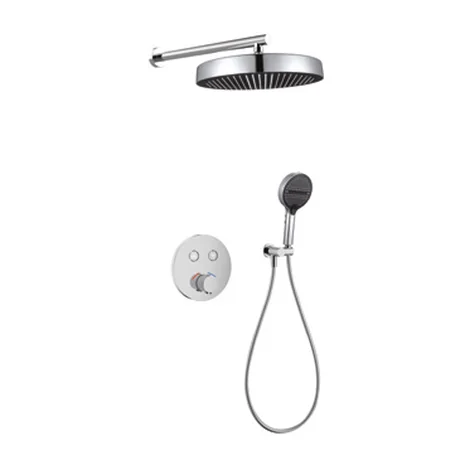
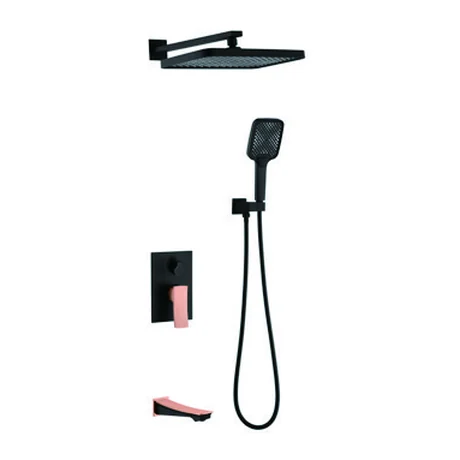
A deck-mounted mixer sits on the basin or the counter and can be chosen late. A concealed one has its valve body buried in the wall, so only the plate and the spout show — and the rough-in has to be on site before the wall is closed up and tiled. Getting this wrong does not cost you the price of a tap. It costs you the wall.
If a project is already tiled, concealed is off the table regardless of what anyone prefers. That is why it belongs at the top of the sheet rather than halfway down.
The cartridge is the part that fails
Everything else on a mixer is essentially plumbing. The cartridge is the moving part, and it is what you are actually buying.
Two distinctions matter:
- Ceramic disc versus anything else. A ceramic disc valve opens and closes on two polished ceramic surfaces rather than a compressible washer. It is the reason a modern single-lever mixer turns off with a quarter turn and stays off.
- Thermostatic versus not. A thermostatic cartridge holds the outlet temperature when pressure changes elsewhere in the system — someone flushing a WC while a shower is running. Without one, the temperature follows the pressure. In a single-bathroom flat that is an annoyance. In a hotel or a family bathroom it is the difference between a complaint and a scald.
A sheet that does not name the cartridge is not telling you the most important thing about the product. Ask.
Finish is a coating, and the names tell you which one
Chrome is electroplated. The gold, grey and bronze finishes are generally a harder deposited coating, and the catalogue names usually describe the compound rather than the colour — zirconium gold and titanium gold are named after what is in the coating, not after a shade card.
What follows practically:
- Two suppliers' "gold" will not match. If a project needs tapware, a shower set and accessories to match, they should come from one range, not three that happen to use the same word.
- A brushed version of a finish and its polished version are different products, not a fitting instruction.
- The finish is the layer you clean. Abrasive pads and acidic cleaners shorten its life far more reliably than use does — see care and maintenance.
The dimensions that are actually load-bearing
Most of the numbers on a spec sheet are packaging. Four are not:
| Dimension | Why it decides something |
|---|---|
| Spout reach | Whether the water lands in the bowl or on the rim |
| Spout height | Whether a tall vessel basin fits underneath |
| Hole spacing | Whether it fits the basin already ordered |
| Overall height | Whether it clears a mirror or a window reveal |
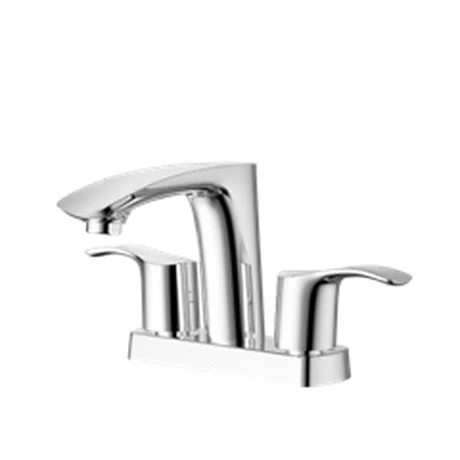
Hole spacing is the one that most often goes wrong late. A three-hole basin comes in widespread and centerset spacings, and they are not interchangeable — a mixer specified for one will not mount on the other. If the basin is already chosen, the spacing is a constraint, not a preference.
What is usually missing
Very few factory sheets state any of the following, and all of them are reasonable to ask for before an order:
- The cartridge make and whether replacements are available separately
- Whether the body is solid or a shell, and what it is made of
- Water-efficiency labelling, and whether the product carries it for the market it is going to — this varies by country and is worth confirming rather than assuming
- Which finishes are actually in production, as opposed to listed
That last one catches people out. A range printed in eleven finishes is not a range stocked in eleven finishes, and the gap tends to appear after an order is placed rather than before.
The short version
Read the sheet in this order: mounting, cartridge, spacing, finish. Everything else can be resolved later. Those four cannot.
If a line you need is not on the sheet, that is not a dead end — it is a question for whoever holds the account with the factory. Where we do not have a figure, we will say so plainly and go and get it.